

My New Muzzle has Arrived! Is it Supposed to Fit Like That?
It can be tricky to determine if your muzzle is the right fit and correctly adjusted, especially if you’re new to muzzles. While we are always here to assist you and give our professional opinion on the fit of your muzzle, we’ve found that there are several aspects to a correctly fit muzzle that are generally universal across all face shapes and types, so we’ve gathered them here for you to help you ensure you’re on the right track!
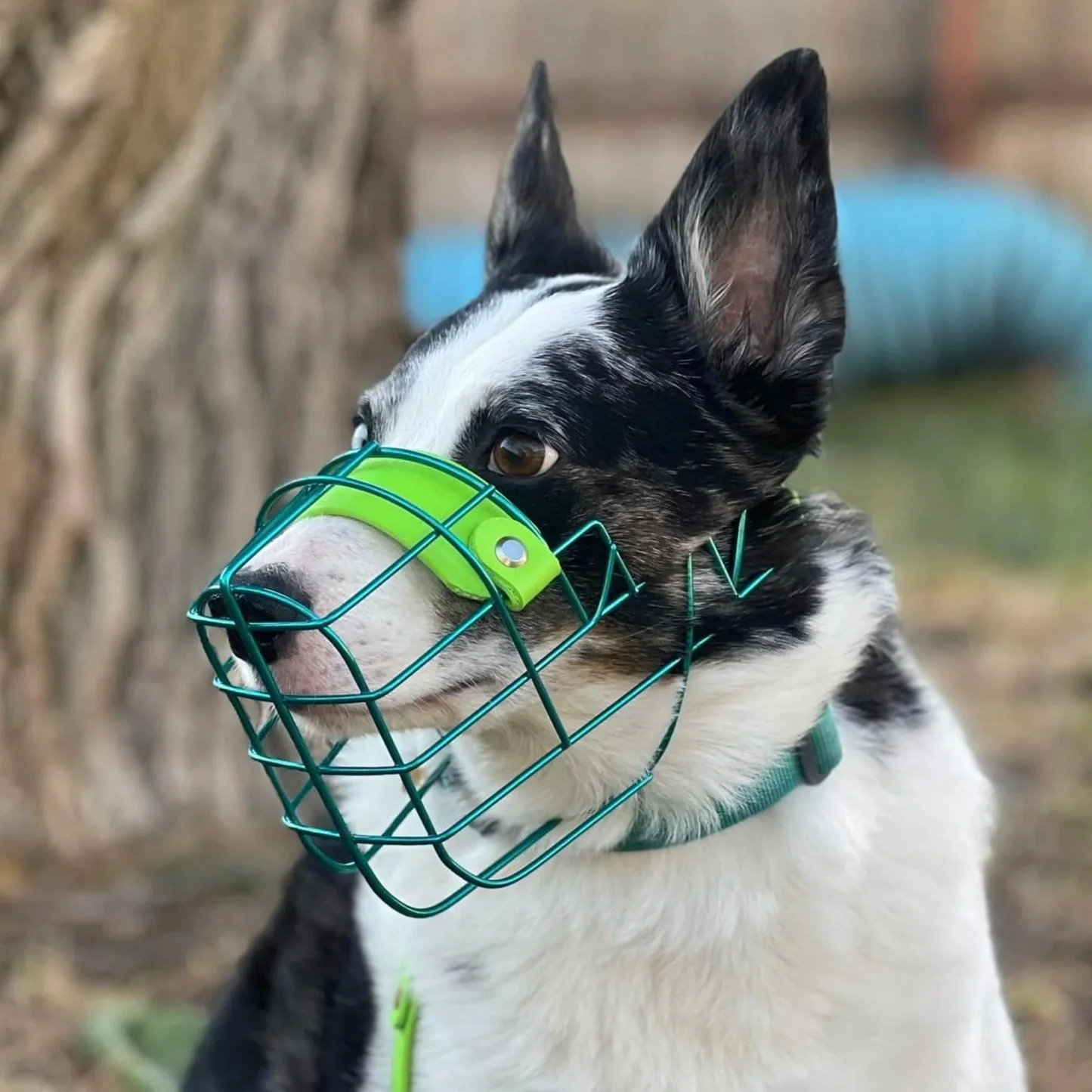
Beneath your dog’s mouth, there should be plenty of space for them to comfortably fully pant. However, this does mean that when your dog rests their head, the top of the muzzle will lift up above their snout and in front of their face, making them look quite silly!
Pictured here is one of our Snoofs, Norah, and you can see that she has plenty of space for her full pant, the muzzle’s noseband sits nicely flat on the bridge of her nose, she can easily take treats, and when she rests her chin on her mom’s knee, the muzzle rises up above her head, but it doesn’t cause her any distress. *Note that the lighter colored muzzle is the same exact muzzle as the darker colored one, we just redid the powder coating, swapped for a wider noseband, and added a muzzle message due to personal preference.

When checking the neck strap adjustment of your muzzle, we’re looking for there to be about .25” (1/4 inch or about 1/2cm) of space between the tip of the nose and the front inside of the basket. Doing this simple maneuver of picking the muzzle gently up, pulling it away from the snout, and letting it rest back on the nose as it naturally wants to sit will help you most accurately determine if the muzzle is correctly adjusted.
The neck strap should sit up high on your dog’s neck just behind the ears, for a correct and secure fit.
If the muzzle snaps back quickly and pushes into your dog’s nose tightly, the muzzle is too tight, and needs the neck strap behind the head to be loosened.
If it stays low on the snout with 1/2” or more of space between the tip of the nose (or lips for dogs with underbites) and the front inside of the muzzle, it’s likely too loose and needs to be tightened.
If you’re unsure, you can send us a video of your pup maneuvering the muzzle just like we do in this video, and we’d be happy to help provide feedback on whether it’s correctly adjusted! :)
It is normal for wire muzzles to be a bit wide in the snout, but comfortably hugging the cheeks. We aim for about .25” of space between the cheeks and muzzle on both sides, which means the muzzle should be a ½ inch wider than your dog’s total cheek width.
If your dog’s cheeks are squished tightly between the cheek bars, you may need to widen them. The “Widening a Big Snoof Muzzle By Hand” video will walk you through how to pull those bars apart by hand.
However if this is too difficult for you, you could alternatively use a table vice to widen your muzzle, since it enables you to make precise adjustments, and it works very well even if you’re not very strong. You can reference our video on how we do this here.

How to Adjust your Muzzle Straps
First, there are some important things to note about our muzzles and the way they are intended to fit. Our muzzles are designed to fit relatively loosely in the basket area, and lots of movement and wobbliness is normal and to be expected. The baskets are , of course, made of stiff wire, and therefore need to have extra space in the basket so they don’t irritate your dog, so they will naturally move around quite a bit in order for your pup to wear them comfortably.
Next, regarding the strap adjustments: the way our muzzles stay securely attached to your pup's head is mostly via the combination of the Neck Strap behind the head (with the buckle) and the Chin Strap under the jaw, which together essentially create a "collar system" around your pup's upper neck, behind the jaw, that will hold the muzzle securely on your dog’s head.
Adjustment of the straps can be tricky for many of our customers, and often leads to concerns about the muzzle not being the correct size. We hope this guide helps you determine how to adjust the straps on your own, but if you need assistance we’re always here to help walk you through the process to ensure the muzzle gets correctly adjusted!
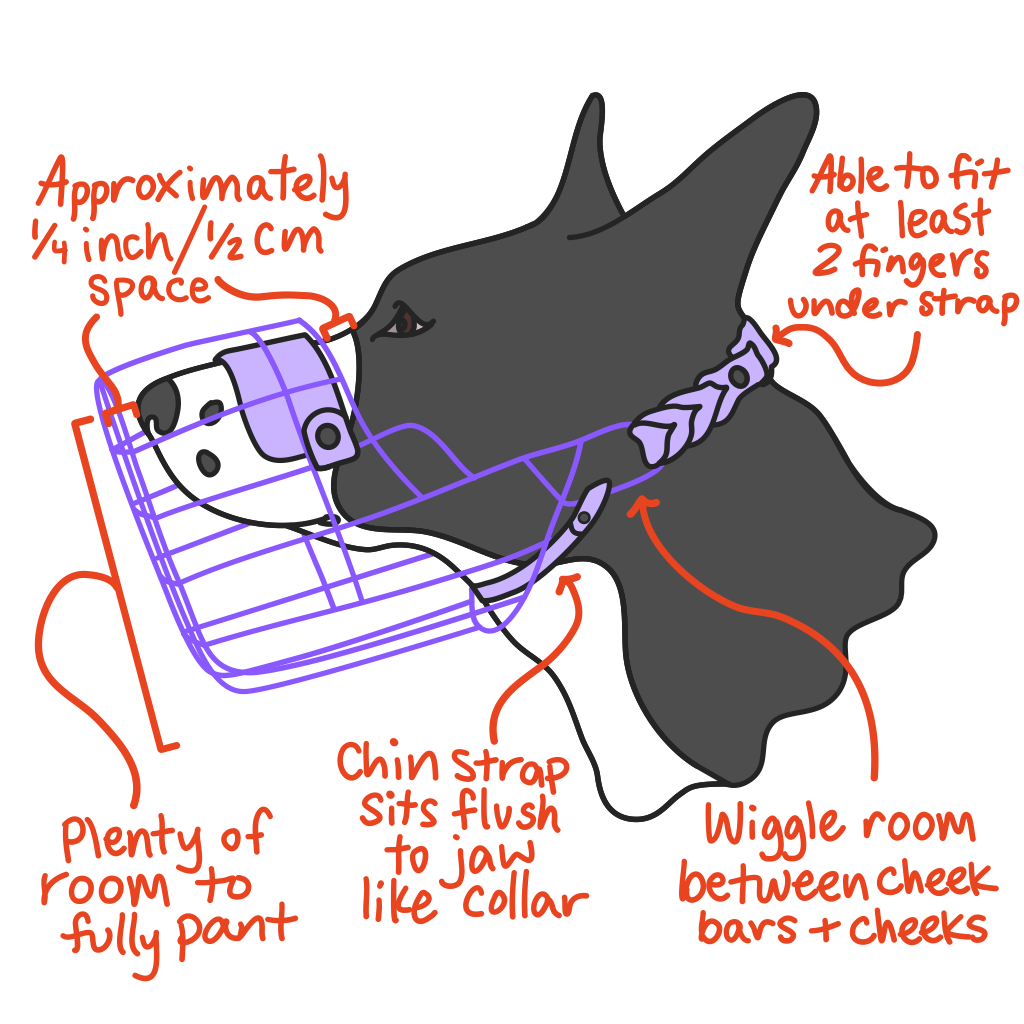
Here is a quick reference graphic of how an ideal muzzle should fit, as pictured on our Head Snoof, Daisy. Note that it’s normal to be able to fit more than two fingers under the Neck Strap— we say two fingers because we want to make sure it’s not too tight ! :)
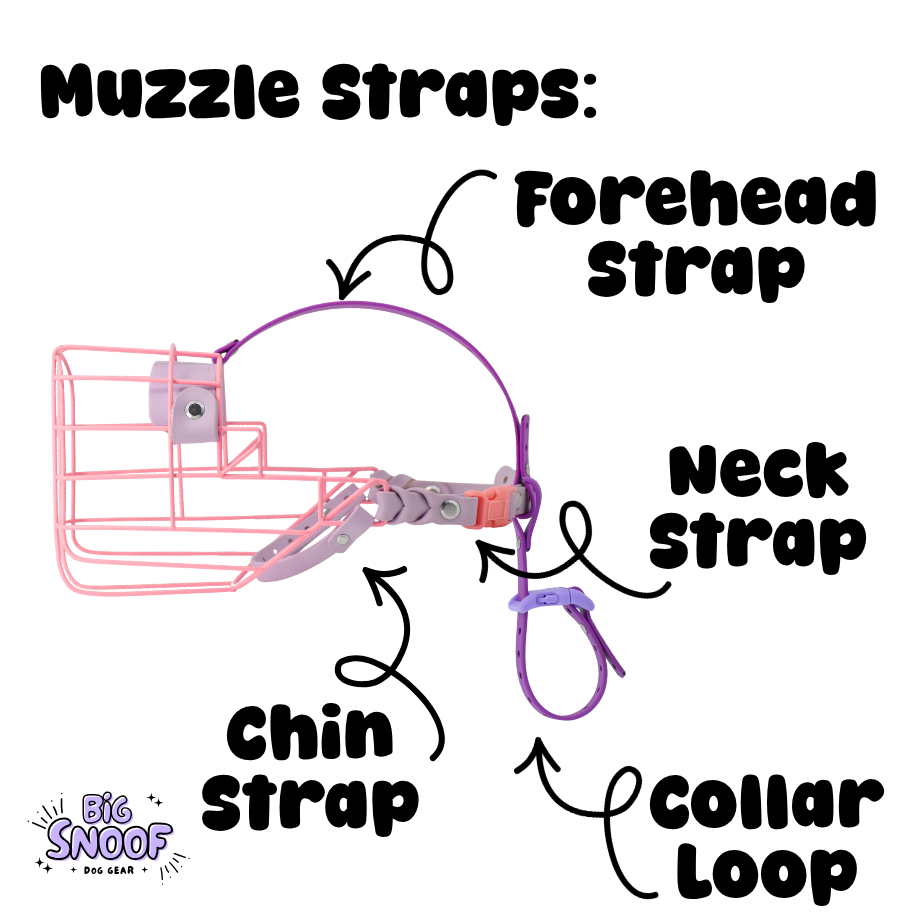
For a correct strap adjustment, we'd recommend following these steps:
Forehead Strap Removal: First, if you have a Forehead Strap, it’s often best to start with removing the Forehead Strap from the muzzle entirely (unless you have a Brachycephalic Custom Muzzle that has no noseband) because this is the last strap in the process that you'll need to adjust, and having it attached while adjusting the others can make adjustment of the other straps more confusing. You will reattach the Forehead Strap to the muzzle as the last step of adjustment.
Neck Strap: Then, you'll need to adjust the Neck Strap behind the head until there is about .25" (1/4 inch) between the tip of the nose and the front inside of the muzzle, when your pup is looking straight ahead or slightly downwards-- note that if the pup is looking upwards/ tilting their head up, gravity will likely take over and leave the muzzle sitting on the tip of their nose no matter how the Neck Strap is adjusted, so the position of their head is important. We also have a video on how to check this adjustment, linked here. If the Neck Strap is too tight, the muzzle will press tightly into your dog’s nose (and potentially their eyes), which is not how it is meant to fit and can cause discomfort and potentially sores on your dog’s face! However we have found that for some rare dog’s face shapes, even if the Neck Strap is adjusted loose enough, the muzzle sometimes will still sit gently on the tip of the nose, which is okay, as long as the muzzle isn’t pressing tightly into it and causing discomfort to your dog.
Chin Strap: Once the Neck Strap is correctly adjusted and there is .25" of space between the tip of the nose and the front inside of the muzzle, you can then tighten the Chin Strap under the jaw to securely fit the "collar system" to your dog's size. The Chin Strap should be tightened as much as possible so that it sits flush to your pup’s neck: somewhat tightly in combination with the Neck Strap, but not so tight that it is uncomfortable for them. Note that tightening the Chin Strap should not change how the basket sits on your dog’s snout-- there should still be .25" of space between the tip of the nose and the front inside of the muzzle.
Forehead Strap Adjustment: Then, once the Neck Strap and Chin Strap are correctly adjusted, you can reattach the Forehead Strap. You'll need to reattach the Forehead Strap so that it does not change the way the basket sits on your dog’s snout. If the Forehead Strap is attached too tightly, it causes the noseband area of the muzzle to sit at an awkward angle upwards, and pulls the muzzle too close to the dog’s eyes and tip of the nose. If it is too loose, it will sit popped up above your dog’s head without really touching their forehead. The Forehead Strap is meant to be a failsafe to prevent the muzzle from slipping too far down and off the end of your dog’s snout (which, if it were to happen, would leave the muzzle hanging around the neck like a necklace), so it should be attached just tight enough that it holds the snout area of the muzzle in the same place that it sits naturally. You'll also want to affix the screw on the back side of the orehead Strap so that it makes as tight of a loop around the Neck Strap it attaches to as possible, which will keep it from sliding around loosely on the Neck Strap.
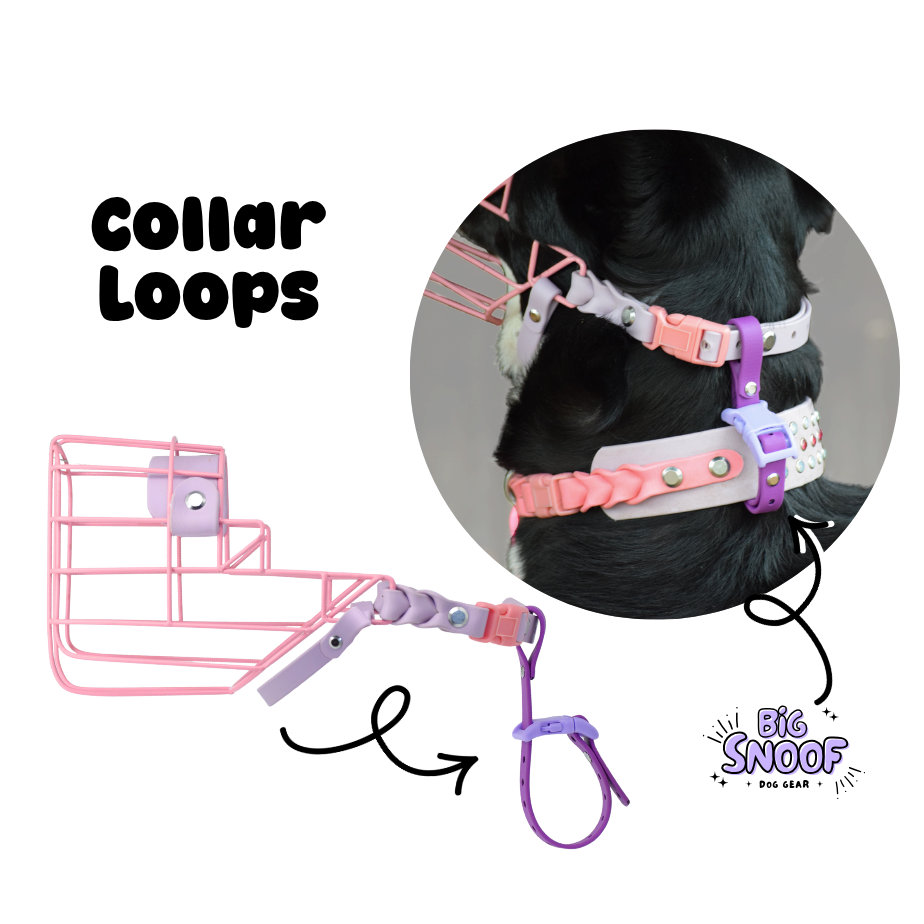
Collar Loop: If you have one, the collar loop is generally the last strap to adjust, and sometimes you’ll find that you may need to adjust it multiple times if you use different collars or harnesses along with the muzzle. The Collar Loop is meant to attach to the the Neck Strap and clip around a collar or harness, to hold the Neck Strap in place, so it doesn’t easily slip off your dog’s ears. Note that it won’t affect the way the muzzle basket sits on your dog, though! To adjust it, you’ll want to tighten the length of the strap so that the buckled loop clips tightly around the collar. The buckle is designed to slip down and tighten around the collar naturally, so you can tighten it to your desired tightness to hold the neck strap close to the collar or harness you’re connecting it to. We do make these straps extra long, so they are adjustable to suit all collar widths, or in case you want to clip the muzzle to a harness instead of a collar! That means that having lots of excess strap length that may need to be trimmed off is totally normal :)
We hope this helps! Feel free to reach out with fit check pictures if you have questions or concerns about adjusting your muzzle straps, and we will certainly help you further! For reference, we’ll want to see both side profile and top profile views of the muzzle.
Standard Muzzle
Noseband Adjustments
Standard Muzzles are all made with one style of noseband, which is designed to be super adjustable in length. Here is a chart showing the ways our Standard Muzzle nosebands can be adjusted in order to best fit your pup’s nose length.
We sell Standards with noseband version “A” as the default, since it is generally better for the noseband to be a little too short on a dog than too long, pushing into their eyes. The idea is that the basket should push into their nose/lips before pushing into their eyes. You can easily use a flathead screwdriver to remove, adjust, and reattach the noseband to get the best fit. Keep in mind that you may need to adjust the neck strap as well to get the correct fit. Please refer to our Returns and Exchanges Policy if you think you have the wrong size.
